
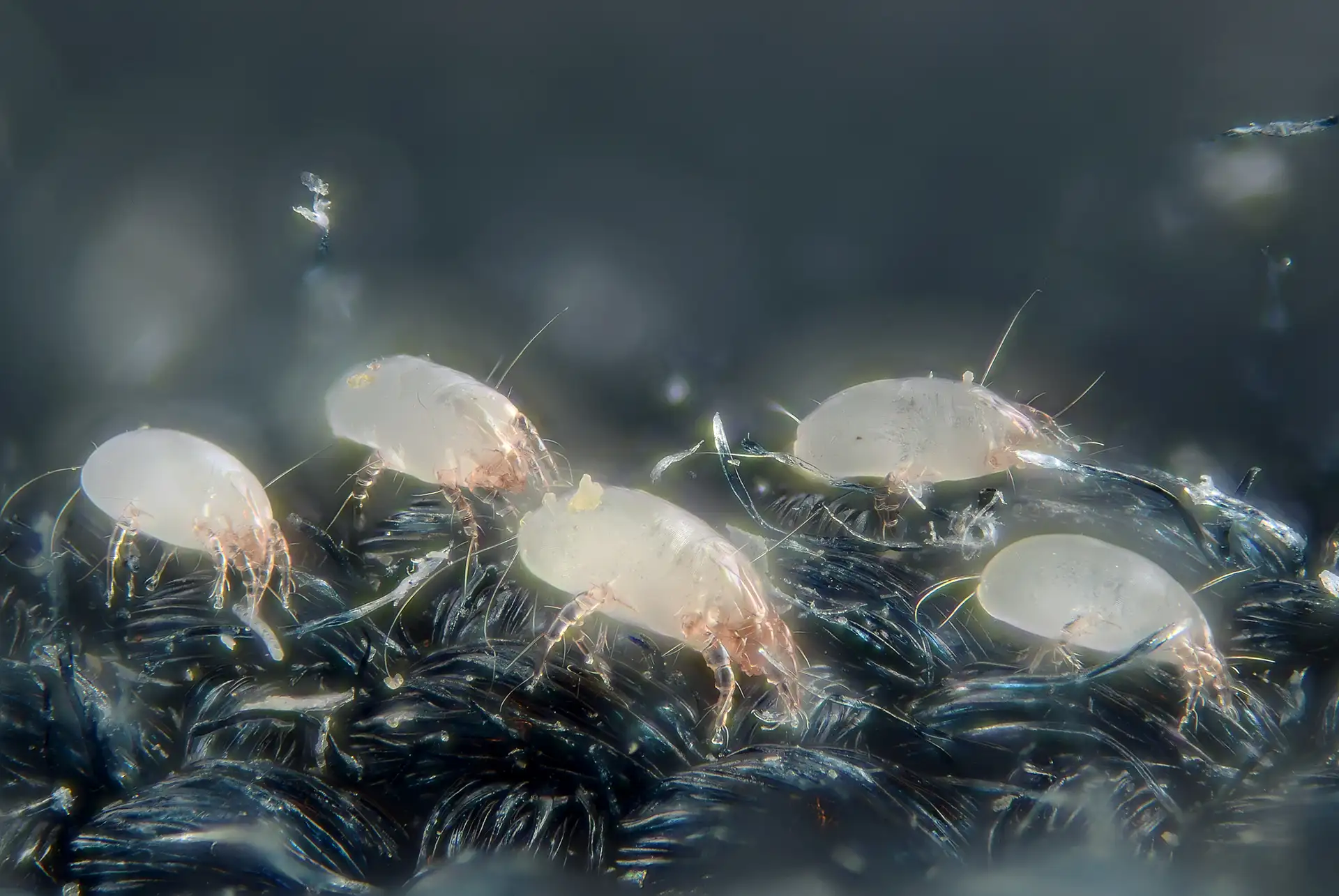
As summer winds down in the Pacific Northwest, you may expect seasonal allergy symptoms to start settling down. But if you’re still waking up congested, sneezing indoors, or noticing itchy, watery eyes, another allergen may be contributing: dust mites.
Dust mite exposure can be especially noticeable in late summer and early fall, after months of warmer, more humid weather. And as cooler weather arrives and we begin spending more time indoors, these tiny household allergens can become harder to ignore.
What Are Dust Mites?
Dust mites are microscopic organisms that live in household dust and feed primarily on flakes of dead skin. They don’t bite or sting, and having dust mites does not mean your home is dirty.
They simply thrive in the same comfortable environments we do—especially warm, humid areas with plenty of soft surfaces.
Common hiding spots include:
- Mattresses and pillows
- Bedding
- Carpets and rugs
- Upholstered furniture
- Stuffed animals
For people with dust mite allergy, proteins found in dust mite particles and waste can trigger an allergic reaction.
Signs You May Have a Dust Mite Allergy
Unlike pollen allergies, which tend to follow more obvious seasonal patterns, dust mite allergies can cause symptoms throughout the year.
Common symptoms include:
- Sneezing
- Stuffy or runny nose
- Itchy, watery eyes
- Postnasal drip
- Coughing
- Itchy nose or throat
Dust mite exposure can also worsen symptoms in some people with allergic asthma, including coughing, wheezing, chest tightness, and shortness of breath. One clue? Symptoms may be particularly noticeable at night or first thing in the morning, since mattresses and bedding are common places for dust mites to live.
How Can You Reduce Dust Mite Exposure?
You probably can’t eliminate dust mites completely, but a few targeted changes can significantly reduce exposure. Start with the bedroom, where we spend many hours each day.
- Keep humidity under control. Dust mites thrive in humid conditions. Aim for an indoor relative humidity of about 40–50%. A small humidity monitor, or hygrometer, can help you keep track.
- Cover mattresses and pillows. Use zippered, allergen-proof covers on mattresses, box springs, and pillows to create a barrier between you and dust mite allergens.
- Wash bedding regularly. Wash sheets, pillowcases, and blankets weekly. Follow bedding care instructions and use a hot dryer when appropriate.
- Think twice about humidifiers. As the weather cools, it can be tempting to add moisture to dry indoor air. But excessive humidity can create a friendlier environment for both dust mites and mold. If you use a humidifier, monitor your home’s humidity carefully.
Vacuum strategically. A vacuum with a HEPA or small-particle filter can help reduce allergens. If vacuuming tends to trigger your symptoms, consider having someone else do it or wear a mask while cleaning.
Still Sniffling This Fall?
Not every stuffy nose is a cold, and not every fall allergy is caused by outdoor pollen. If you experience persistent congestion, sneezing, itchy eyes, coughing, or asthma symptoms indoors, allergy testing can help determine whether dust mites or another indoor allergen may be contributing.
At Bellingham Asthma, Allergy & Immunology Clinic, we can help identify your triggers and develop a treatment plan that may include environmental changes, medications, or allergen immunotherapy. Fall should be cozy, not congested. If indoor allergy symptoms are getting in the way, contact BAAIC to schedule an evaluation.
Sources
American Academy of Allergy, Asthma & Immunology (AAAAI): Indoor Allergens and Allergy and Asthma Cleaning Tips
American College of Allergy, Asthma & Immunology (ACAAI): Dust Allergy