
What They Are and How to Treat Them
If you’ve ever broken out in itchy, raised welts that seemed to appear out of nowhere — you’re not alone. Hives, or urticaria, are one of the most common skin reactions we see at BAAIC. Here’s what you should know.
What Are Hives?
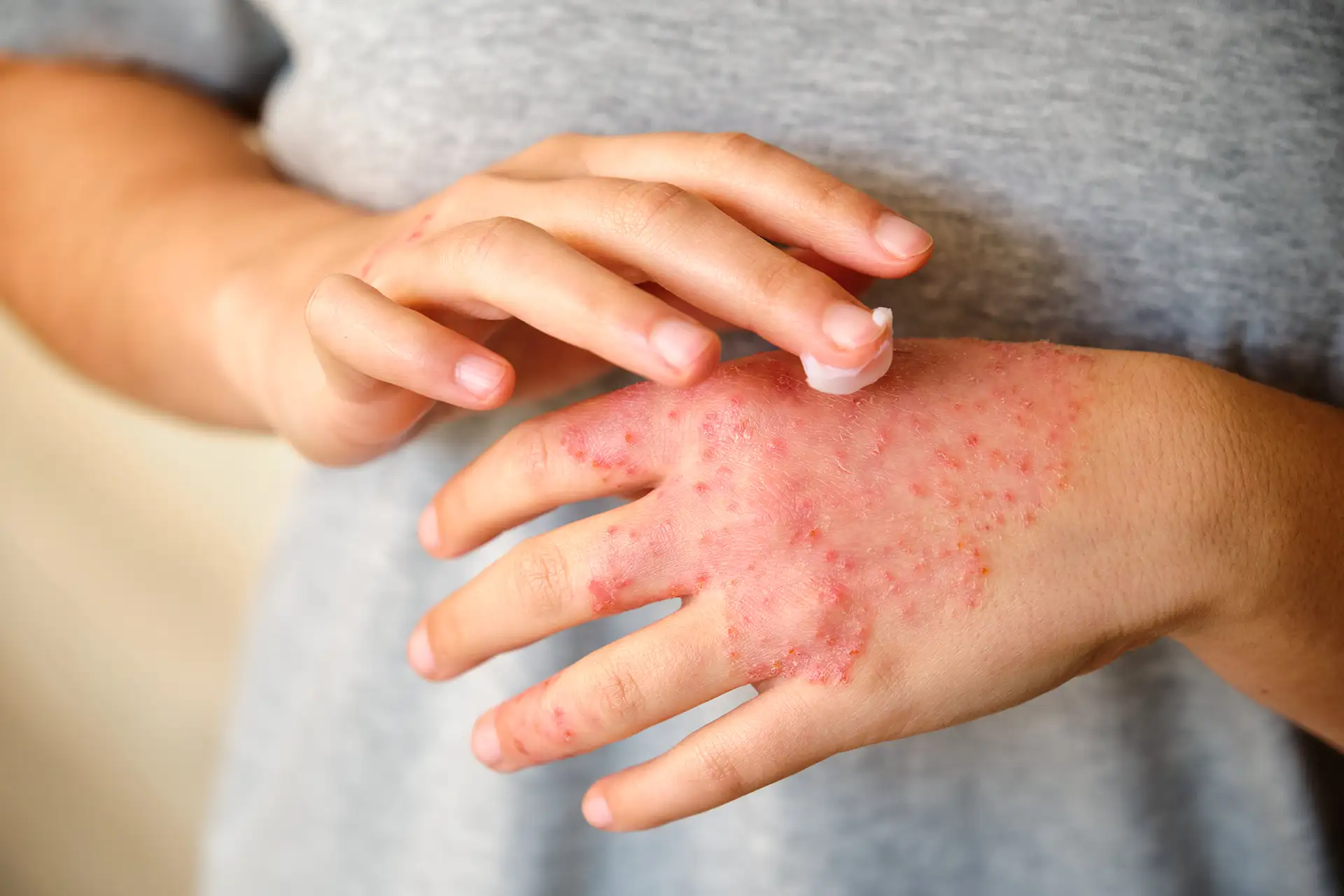
Hives are itchy, raised bumps that can appear pink or reddish on the skin. They can show up anywhere on the body, range in size from a few millimeters to several centimeters, and often appear without any warning. The good news: individual hives typically fade within 24 hours and don’t leave marks or bruising behind.
Two Types: Acute vs. Chronic
Acute Urticaria
Lasts less than six weeks and is often triggered by:
- Viral infections (the most common cause)
- Food or drug allergies
- Environmental allergens
- Insect bites
Chronic Urticaria
Lasts more than six weeks and comes in two forms:
- Spontaneous: Hives that arise on their own, sometimes linked to autoimmune conditions or thyroid antibodies.
- Inducible (Physical): Hives triggered by a specific physical stimulus, such as:
- Scratching or rubbing the skin (dermatographic urticaria)
- Pressure from tight clothing (pressure urticaria)
- Sweating or heat (cholinergic urticaria)
- Cold temperatures or ice (cold urticaria)
- Vibration (vibration-induced angioedema)
- Sun exposure (solar urticaria)
- Water contact (aquagenic urticaria)
Treatment
Antihistamines are often the first line of defense for chronic hives and can be very effective. Your BAAIC provider will work with you to build a treatment plan that fits your lifestyle — scaling up during flare-ups and pulling back when symptoms settle down.
Not Sure What’s Causing Your Hives?
Identifying the trigger is the first step toward real relief. If you’re dealing with recurring or persistent hives, our team can help pinpoint the cause and get you on the right track.