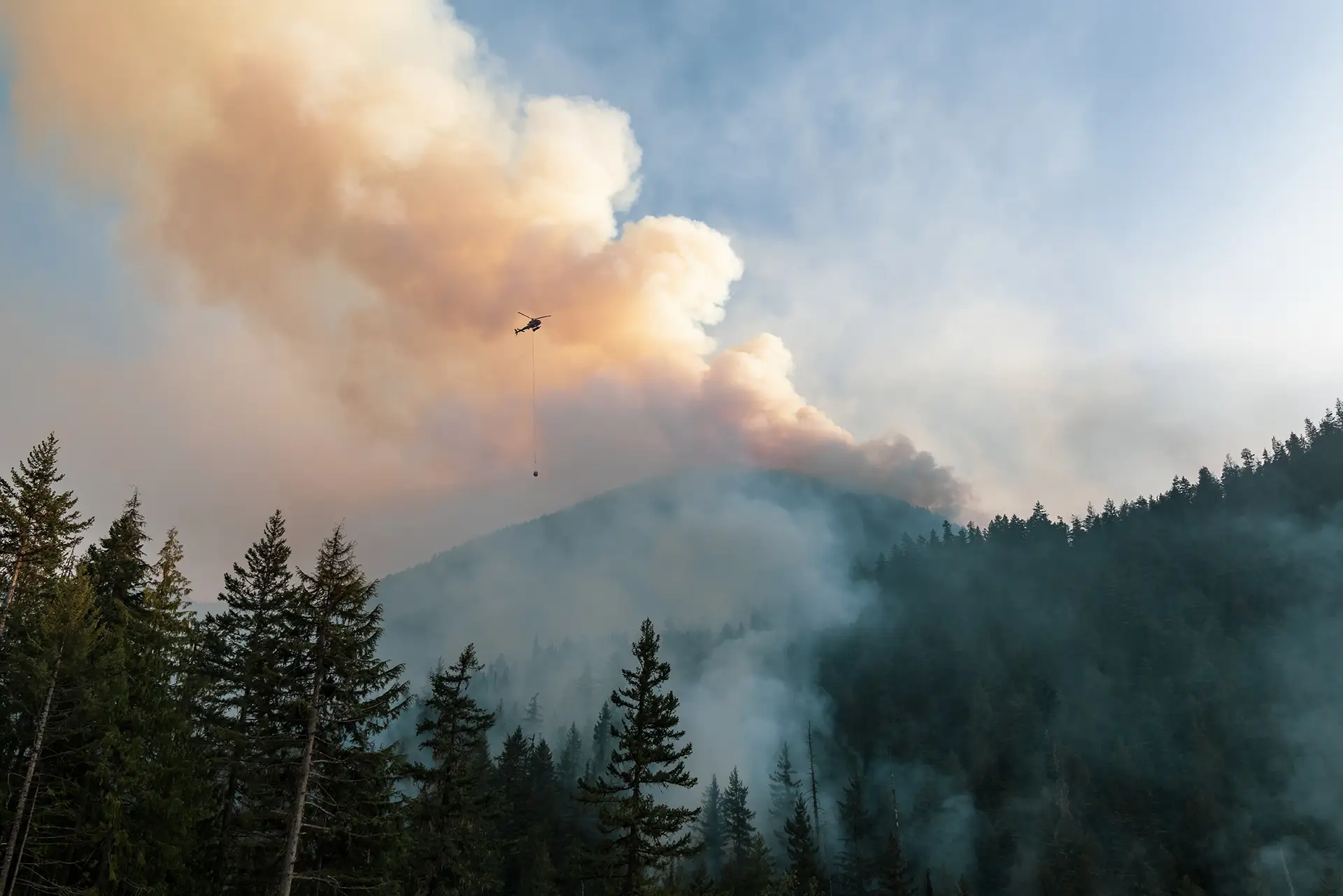
Late summer and early fall in the Pacific Northwest can bring beautiful days—but also an unwelcome visitor: wildfire smoke.
Even when a wildfire is hundreds of miles away, smoke can travel long distances and affect the air we breathe. For people with asthma and other respiratory conditions, smoky air can be especially challenging. And even if you don’t have a lung condition, wildfire smoke can irritate your eyes, nose, throat, and lungs.
Here’s what to know—and what you can do to breathe a little easier when smoke rolls into Whatcom County.
Why Is Wildfire Smoke a Problem?
Wildfire smoke is a complex mixture of gases and tiny particles. One of the biggest health concerns is fine particulate matter, or PM2.5—particles small enough to travel deep into the lungs. (Learn more from the American Lung Association.)
Exposure to wildfire smoke can cause symptoms such as:
- Coughing or throat irritation
- Burning or watery eyes
- Nasal and sinus irritation
- Chest tightness
- Wheezing
- Shortness of breath
- Increased asthma symptoms
Children, older adults, pregnant people, and those with asthma, or chronic lung disease.
Allergies or Smoke? Sometimes It’s Hard to Tell.
Wildfire smoke isn’t an allergen like grass, tree, or weed pollen. But it is a powerful respiratory irritant, and some of the symptoms can feel a lot like seasonal allergies.
A runny or stuffy nose, irritated eyes, coughing, and throat discomfort can occur with either smoke exposure or allergies—and during late summer, you may be dealing with both at once.
One clue? Itching of the eyes and nose and frequent sneezing tend to be more characteristic of allergies. Coughing, chest irritation, wheezing, and shortness of breath during periods of poor air quality may point more toward smoke exposure, particularly for people with asthma.
Have Asthma? Pay Extra Attention to Smoky Days.
Wildfire smoke can trigger inflammation and worsen asthma symptoms. During smoke events, people with asthma may notice more coughing, wheezing, chest tightness, shortness of breath, or an increased need for rescue medication.
If you have asthma:
- Make sure to take your prescribed controller medications. This is very important!
- Make sure you have your rescue inhaler available.
- Pay attention to changes in your symptoms.
Don’t wait until a particularly smoky day to discover that you’re out of an important medication!
Check the Air Before You Head Outside
The Air Quality Index (AQI) is an easy way to check current air quality and decide whether you may need to modify outdoor activities.
As air quality worsens, people who are more sensitive to smoke should reduce outdoor exposure and strenuous activity. At higher AQI levels, everyone may need to take precautions.
5 Ways to Breathe Easier on Smoky Days
1. Keep the smoke outside.
Close windows and doors when outdoor air quality is poor. If possible, set your heating or cooling system to recirculate indoor air rather than bringing smoky outdoor air inside.
2. Filter your indoor air.
A properly sized portable air cleaner with a HEPA filter can help reduce fine particles indoors.
3. Create a cleaner-air space.
Consider choosing one room in your home where you can keep doors and windows closed and run a portable air cleaner. This can provide a place to spend more time when outdoor smoke levels are high.
4. Rethink outdoor exercise.
The harder you exercise, the more air—and potentially smoke—you breathe. Consider moving workouts indoors or reducing the intensity and duration of outdoor activities when air quality is poor.
5. If you have to be outside, consider an N95.
A well-fitting N95 respirator can help filter fine particles from wildfire smoke.
A Little Preparation Goes a Long Way
Wildfire smoke has increasingly become an air-quality concern well beyond the immediate area of a fire. Smoke can travel hundreds or even thousands of miles, making it worth preparing for smoky days before they arrive.
Before the next smoke event, consider checking your medication supply, replacing air-cleaner or HVAC filters, and bookmarking an air-quality resource.
And if smoke seems to be triggering frequent asthma symptoms, wheezing, shortness of breath, or other respiratory problems, we’re here to help. At Bellingham Asthma, Allergy & Immunology Clinic, we can help you make sure your asthma and allergy treatment plan is ready for whatever the Pacific Northwest air sends our way.